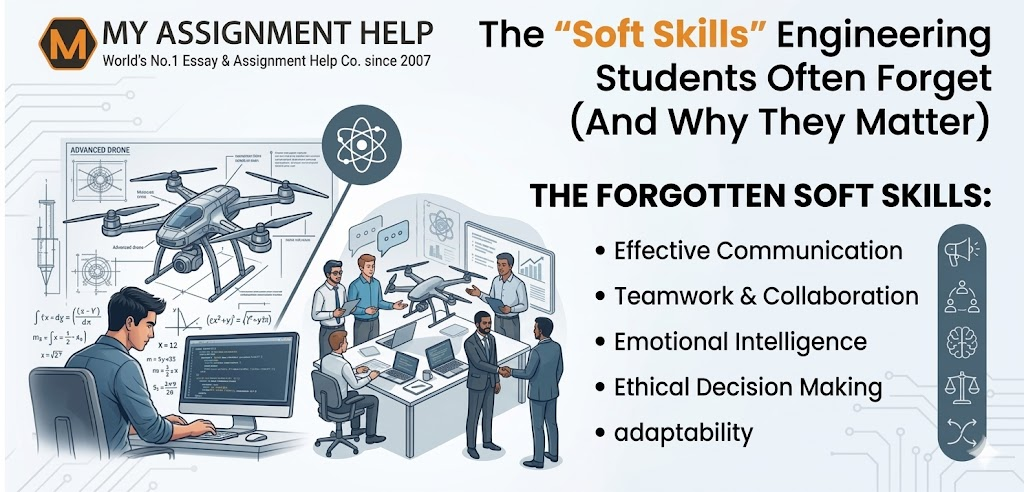
In the rigorous world of engineering, the spotlight is almost always on technical prowess. Students spend countless hours mastering thermodynamics, circuit analysis, and multivariable calculus. While these “hard skills” are the foundation of any engineering career, the modern professional landscape is shifting. Recruiters at top-tier firms like Google, Boeing, and Tesla are increasingly looking for something more: the “soft skills” that allow an engineer to function effectively within a complex, human-centric organization.
According to a study by the American Society for Engineering Education (ASEE), while technical competency remains a baseline requirement, the “skills gap” most cited by employers involves communication, teamwork, and ethical decision-making. For a student aiming to transition from a lecture hall to a high-stakes laboratory or construction site, mastering these overlooked attributes is no longer optional—it is a competitive necessity.
Why Soft Skills are the New Hard Skills
Engineering is rarely a solo endeavor. Whether you are designing a sustainable skyscraper or a new software architecture, you are part of a multidisciplinary ecosystem. This is where many students struggle; they can solve a complex differential equation but find it difficult to explain the implications of that solution to a non-technical stakeholder.
For many students, the sheer volume of technical coursework can be overwhelming, leading them to seek engineering assignment help to manage their academic load. This strategy allows them to maintain their GPA while carving out the mental bandwidth necessary to participate in leadership workshops, volunteer projects, or networking events that build interpersonal emotional intelligence.
1. The Art of Technical Communication
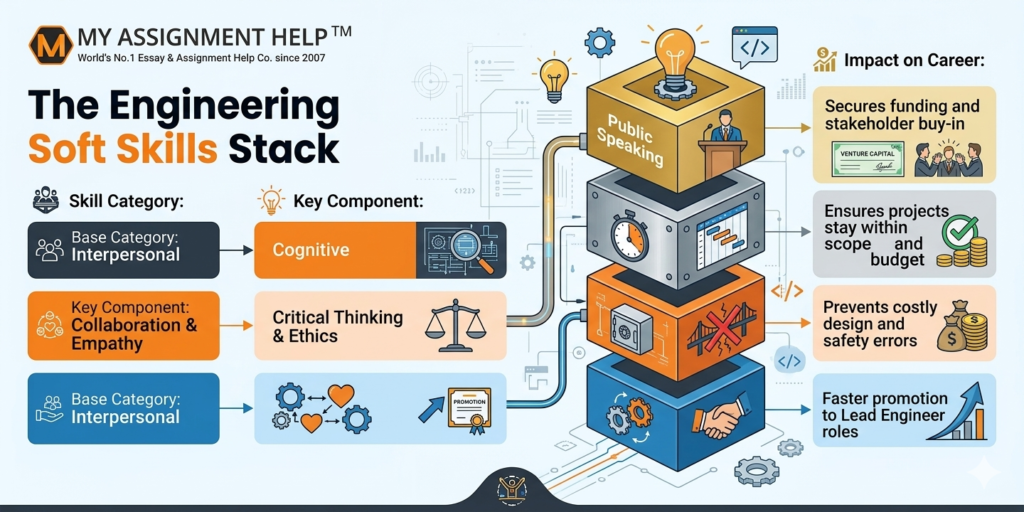
Perhaps the most critical “forgotten” skill is the ability to translate technical jargon into “layman’s terms.” An engineer who cannot convince a project manager or a venture capitalist of their idea’s value will see that idea remain on the drawing board.
Data from LinkedIn’s 2024 Workplace Learning Report suggests that communication is the number one most in-demand skill globally. In engineering, this manifests in:
- Active Listening: Understanding the client’s needs before jumping into the solution.
- Visual Storytelling: Using data visualization to make complex trends accessible.
- Concise Writing: Creating reports that get straight to the point without losing technical accuracy.
2. Emotional Intelligence (EQ) and Conflict Resolution
Engineering projects are high-pressure environments. Deadlines are tight, and budgets are often tighter. When a design flaw is discovered 48 hours before a launch, the team’s success depends on EQ.
Students often forget that “being right” is less important than “getting it right” as a team. Cultivating EQ helps in navigating the inevitable friction that arises during peer reviews. If you find yourself bogged down by the stress of academic deadlines, it might be wise to ask a professional to write my assignment so you can focus on developing the resilience and empathy required for future leadership roles. High EQ leads to better retention rates in engineering firms and higher overall project success scores.
3. Adaptability and Lifelong Learning
The half-life of a technical skill is shrinking. The software tools used today may be obsolete in five years. What remains constant is the ability to learn how to learn. The National Academy of Engineering (NAE) emphasizes “agility” as a core pillar for the engineer of 2026. This means being open to feedback and willing to pivot when a long-held technical assumption is proven wrong by new data.
4. Ethical Reasoning and Social Responsibility
In the age of AI and autonomous systems, the ethical implications of engineering decisions are more profound than ever. Engineering students often treat “Ethics” as a checkbox elective. However, the National Society of Professional Engineers (NSPE) Code of Ethics demands that the “safety, health, and welfare of the public” be held paramount.
Understanding the social impact of a bridge, a data algorithm, or a power grid requires a level of critical thinking that goes beyond a calculator. Employers are looking for engineers who can foresee the long-term consequences of their work on diverse communities.
5. Time and Project Management
The transition from a structured syllabus to an open-ended professional project is jarring. Students are used to having specific “due dates.” In the professional world, you are often managing multiple overlapping timelines. Learning tools like Gantt charts, Agile methodology, and Scrum frameworks early on can set an engineering graduate apart from their peers.
Key Takeaways
- Technical skills get you the interview; soft skills get you the job.
- Communication is a bridge: It connects your technical genius to the rest of the world.
- EQ > IQ when it comes to long-term leadership and team management in STEM.
- Ethics is not an elective: It is a core requirement for public safety and professional integrity.
- Outsourcing busy work can provide the necessary time to focus on these high-level interpersonal competencies.
Frequently Asked Questions (FAQ)
Q: Are soft skills really more important than my GPA?
A: Not necessarily “more” important, but equally vital. A high GPA gets your resume through the initial screening, but soft skills determine your performance in the behavioral interview and your trajectory within the company.
Q: How can I practice these skills while in school?
A: Join student chapters of professional organizations (like IEEE or ASME), take on leadership roles in group projects, and practice presenting your findings to friends who aren’t in engineering.
Q: Do employers actually test for these during recruitment?
A: Yes. Many firms now use “situational judgment tests” and behavioral interview questions (e.g., “Tell me about a time you dealt with a difficult teammate”) to assess your soft skill level.
Author Bio: James Anderson
Senior Academic Consultant at MyAssignmentHelp
James Anderson is a veteran educator and content strategist with over 12 years of experience in the EdTech sector. Holding a Master’s in Educational Leadership, James specializes in helping STEM students bridge the gap between academic theory and professional practice. He is a frequent contributor to journals focusing on E-E-A-T principles in digital education and is passionate about empowering the next generation of engineers with holistic career skills.
References
- American Society for Engineering Education (ASEE). (2024). The State of Engineering Education and Employment.
- National Society of Professional Engineers (NSPE). (2025). Code of Ethics for Engineers.
- LinkedIn Learning. (2024). Most In-Demand Skills in the Global Job Market.
- National Academy of Engineering (NAE). (2023). The Engineer of 2020 and Beyond: Adaptability in a Changing World.