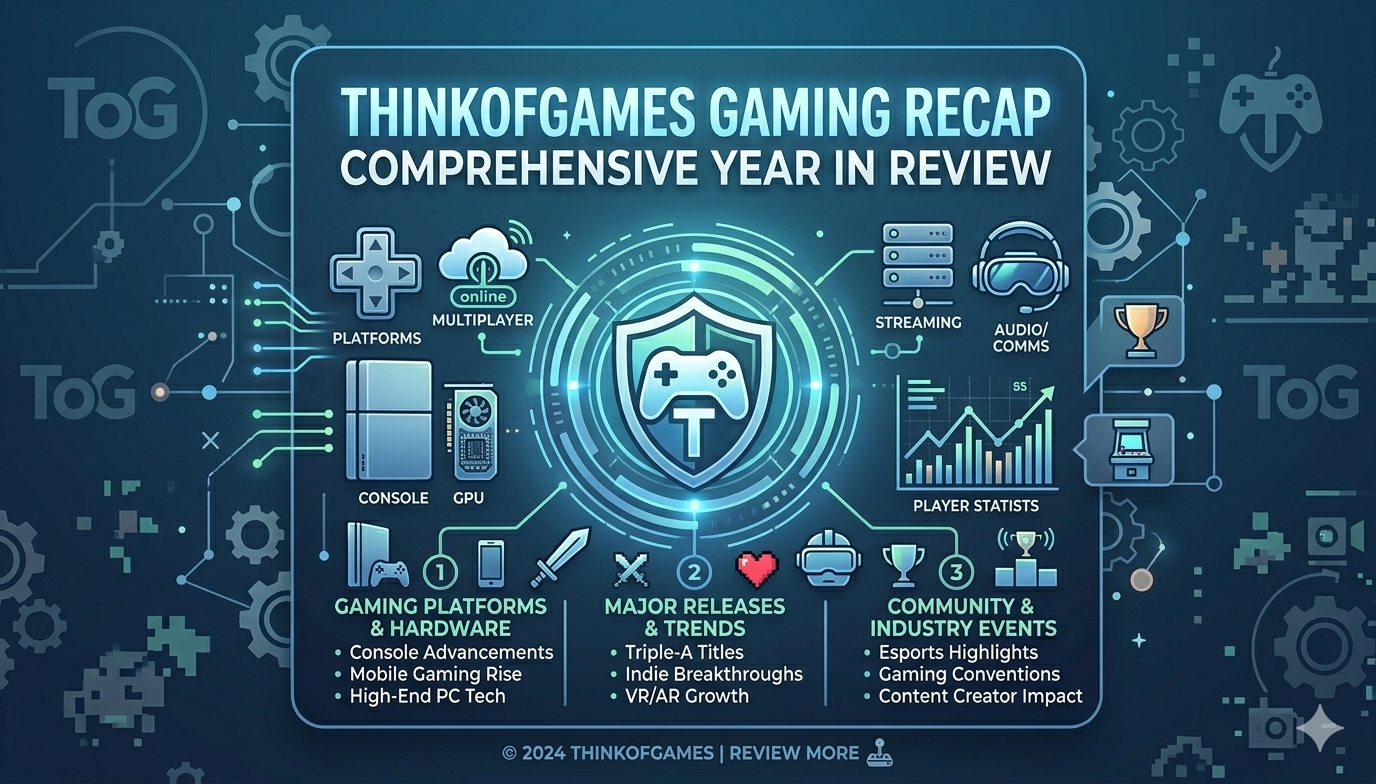
thinkofgames gaming togrecap has become a pivotal source of insights for gaming enthusiasts and industry analysts alike, providing a comprehensive view of trends, challenges, and innovations that shape the gaming world today. From competitive esports to indie game breakthroughs, the gaming ecosystem continues to expand at a remarkable pace, influencing not only entertainment but also technology, culture, and business.
Understanding the Global Gaming Industry
The gaming industry has grown exponentially in recent years, surpassing many traditional entertainment sectors in both revenue and audience engagement. Analysts estimate that the global gaming market now generates hundreds of billions of dollars annually, with significant contributions from both console and mobile platforms. In particular, the United States remains one of the largest markets, hosting some of the most influential game studios and esports leagues.
Insights from thinkofgames gaming togrecap reveal that players are no longer passive consumers; they are active participants who influence game design, community engagement, and even monetization strategies. This shift has pushed developers to prioritize user experience and social interaction, creating games that are immersive, interactive, and socially connected.
The Rise of Esports and Competitive Gaming
One of the most prominent trends highlighted by thinkofgames gaming togrecap is the meteoric rise of esports. Competitive gaming has evolved from casual tournaments to professionally organized leagues with massive audiences, sponsorship deals, and international recognition. Games like League of Legends, Dota 2, and Call of Duty have cultivated professional ecosystems, complete with franchised teams, salaried players, and global tournaments broadcast to millions of fans.
This evolution demonstrates that gaming is not merely a pastime; it is now a career pathway and a significant entertainment platform. The professionalization of esports also creates economic opportunities, from event management and broadcasting to marketing and game development.
The Impact of Mobile Gaming
Mobile gaming has dramatically transformed the accessibility of games, enabling users to play anytime and anywhere. According to thinkofgames gaming togrecap, mobile platforms account for a substantial portion of the gaming market, driven by freemium models, microtransactions, and social gaming apps. Casual gamers, who may not own consoles or high-end PCs, now contribute heavily to overall revenue, demonstrating that inclusivity can expand both reach and profitability.
Moreover, mobile gaming fosters innovation in design. Short-form, engaging experiences like puzzle games, strategy challenges, and augmented reality (AR) apps appeal to diverse audiences and encourage continuous engagement. Developers increasingly leverage analytics to understand player behavior and refine in-game mechanics, keeping players invested and creating long-term loyalty.
Indie Games and Creative Innovation
While large studios dominate the mainstream, indie games continue to push the boundaries of creativity and storytelling. Platforms like Steam, itch.io, and console marketplaces have democratized game publishing, allowing smaller teams to reach global audiences. Insights from thinkofgames gaming togrecap emphasize that indie games often introduce experimental mechanics, unique art styles, and narrative-driven experiences that influence the broader industry.
Indie developers also highlight the importance of community feedback. Early access releases, beta testing, and crowdfunding initiatives empower players to shape the final product. This participatory model strengthens the connection between developers and players, fostering a culture of collaboration that benefits both parties. endbugflow, Feed by way, connecting to wifi, viral manners, networth.
The Role of Virtual Reality and Augmented Reality
Virtual reality (VR) and augmented reality (AR) technologies have redefined immersion in gaming. Through headsets, motion tracking, and spatial audio, players can interact with virtual worlds in unprecedented ways. According to thinkofgames gaming togrecap, VR and AR are not just about visual fidelity; they fundamentally change how players engage with content, offering experiences that combine physical presence with digital innovation.
The potential of these technologies extends beyond entertainment. Training simulations, educational experiences, and virtual tourism are emerging applications, indicating that the influence of VR and AR will permeate various industries. As hardware becomes more affordable and software more sophisticated, these immersive platforms are expected to play an increasingly central role in the gaming ecosystem.
Social Gaming and Community Building
Modern gaming is intrinsically social. Multiplayer platforms, cooperative missions, and shared online spaces encourage collaboration, competition, and community building. Insights from thinkofgames gaming togrecap suggest that successful games are those that foster meaningful social connections, whether through guilds, clans, or streaming communities.
Streaming platforms like Twitch and YouTube Gaming have further blurred the lines between playing and spectating. Gamers now broadcast their experiences to large audiences, creating influencer-led economies and reshaping marketing strategies. Developers increasingly consider live streaming potential in game design, integrating features that enhance shareability and audience engagement. guides thinkofgames .com
Monetization Strategies in the Gaming Industry
Revenue generation has diversified far beyond traditional game sales. Microtransactions, season passes, in-game advertising, and subscription services provide steady income streams for developers. thinkofgames gaming togrecap highlights that monetization strategies are evolving to balance profitability with player satisfaction. Excessive monetization risks alienating users, while innovative approaches—like cosmetic items or episodic content—enhance engagement without detracting from the core experience.
This evolution also reflects broader trends in digital consumption, where consumers expect flexible pricing and ongoing value. Subscription services, such as Game Pass and PlayStation Plus, exemplify this model by offering extensive game libraries for a predictable fee, encouraging long-term player retention.
Artificial Intelligence in Game Development
Artificial intelligence (AI) is becoming a cornerstone of game development. AI-driven systems enhance NPC behavior, procedural content generation, and personalized experiences. According to thinkofgames gaming togrecap, AI allows developers to create dynamic worlds that respond intelligently to player actions, increasing immersion and replayability. nothing2hide
Additionally, AI is used to analyze player behavior, detect cheating, and optimize matchmaking. These applications ensure fair play, maintain community standards, and deliver experiences tailored to individual preferences, highlighting how technology can enhance both creativity and functionality in gaming.
Cloud Gaming and Accessibility
Cloud gaming is another transformative trend, enabling players to access high-quality titles without owning powerful hardware. Services like Google Stadia, NVIDIA GeForce Now, and Xbox Cloud Gaming leverage streaming technology to deliver console-level experiences on a variety of devices. Insights from thinkofgames gaming togrecap emphasize that cloud gaming lowers entry barriers, making gaming more inclusive and widely available.
By decoupling hardware from software, cloud gaming also facilitates cross-platform play, enabling friends to connect across devices and regions. This connectivity fosters global communities and encourages competitive engagement at an unprecedented scale.
Gaming as Cultural Phenomenon
Gaming is no longer confined to screens; it has become a cultural phenomenon that shapes art, fashion, music, and storytelling. From cosplay conventions to fan art, players actively participate in expanding the gaming narrative beyond the original content. thinkofgames gaming togrecap underscores that these cultural contributions strengthen brand loyalty and community identity, turning games into shared experiences rather than isolated entertainment.
The cultural significance of gaming is particularly evident in the United States, where tournaments, fan conventions, and media collaborations highlight the industry’s social and economic impact. Gaming has evolved into a lifestyle, influencing social norms, creative expression, and even political discourse.
The Future of Gaming: Trends and Predictions
Looking forward, the gaming industry is poised for continued growth and innovation. thinkofgames gaming togrecap predicts several emerging trends:
- Increased cross-platform integration – Games that operate seamlessly across devices will become standard, allowing players to transition between consoles, PCs, and mobile devices without losing progress.
- Enhanced personalization – AI-driven personalization will tailor experiences to individual preferences, increasing engagement and satisfaction.
- Sustainable gaming practices – Environmental and ethical considerations will influence hardware production, digital distribution, and in-game monetization.
- Greater emphasis on narrative and storytelling – Immersive storytelling will continue to define player experiences, bridging the gap between traditional media and interactive entertainment.
These trends indicate a vibrant future for gaming, where technological advancement, creative innovation, and community engagement intersect to create richer experiences for players worldwide.
The Influence of Streaming and Content Creation
The rise of content creators has redefined how games are marketed and consumed. Streamers and YouTubers serve as both entertainers and influencers, shaping player choices and trends. According to thinkofgames gaming togrecap, game developers increasingly collaborate with influencers to launch campaigns, beta tests, and live events, effectively leveraging social proof to reach audiences.
This symbiotic relationship benefits creators, developers, and players alike. Content creators gain revenue and recognition, developers acquire targeted promotion, and players enjoy curated recommendations and live engagement. The ecosystem reinforces the social and commercial dimensions of modern gaming.
Challenges Facing the Gaming Industry
Despite its growth, the gaming industry faces several challenges. Intellectual property concerns, cybersecurity threats, and monetization controversies are recurring issues. Insights from thinkofgames gaming togrecap reveal that balancing innovation with ethical practices is critical. Over-monetization, toxic community behavior, and exploitative practices can harm reputations and diminish player trust.
Moreover, the fast-paced evolution of technology demands continuous adaptation from developers. Staying ahead in graphics, gameplay mechanics, and platform integration is essential to maintain relevance in an increasingly competitive landscape.
Gaming Communities and Mental Health
Gaming can provide numerous cognitive and social benefits, including problem-solving, collaboration, and stress relief. However, excessive play or toxic community dynamics can negatively affect mental health. According to thinkofgames gaming togrecap, fostering positive gaming communities, implementing moderation systems, and encouraging balanced play are essential steps toward ensuring that gaming remains a healthy, enriching activity.
Initiatives like in-game reporting tools, community guidelines, and mental health awareness campaigns reflect a growing recognition of the importance of responsible gaming practices.
Conclusion: Embracing the Digital Playground
The gaming industry is a dynamic, multifaceted ecosystem that continues to evolve rapidly. From indie innovation to blockbuster releases, from esports to VR experiences, the landscape is shaped by creativity, technology, and community engagement. Insights from thinkofgames gaming togrecap demonstrate that understanding these trends is vital for developers, players, and investors alike.
As the industry matures, inclusivity, innovation, and ethical practices will remain central to its success. With a global audience and limitless potential for growth, gaming is no longer just entertainment—it is a cultural, economic, and technological force, connecting millions of players across the world in shared experiences that transcend borders and devices.
Whether you are a casual gamer, a professional esports competitor, or a developer, keeping pace with insights from thinkofgames gaming togrecap ensures that you are part of a thriving, ever-evolving digital playground.